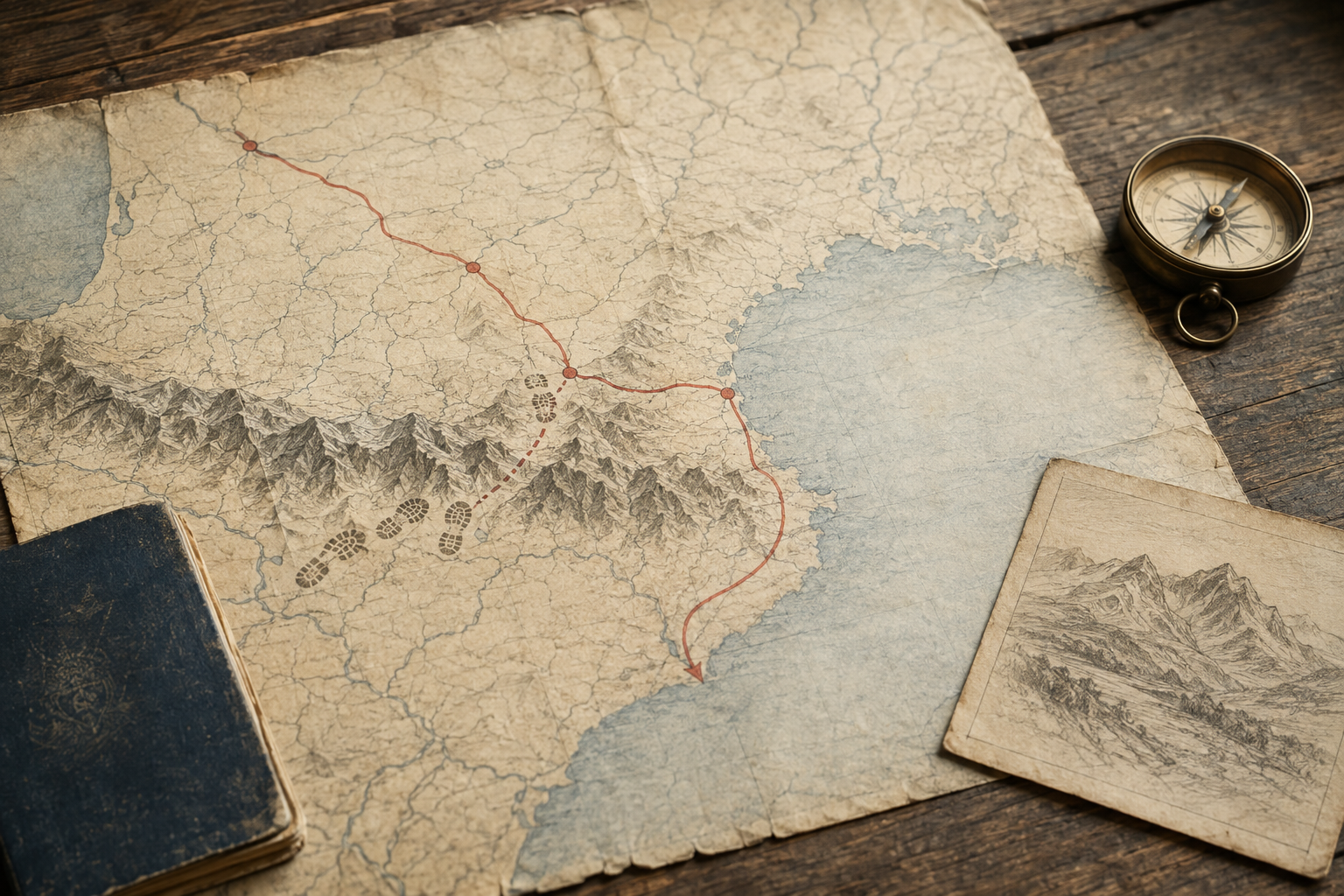
An interpretive map of Virginia Hall’s escape across the Pyrenees

The Library · Footsteps

Virginia Hall

A life shaped by ingenuity, persistence, quiet courage, and service.

1906–1982

The path was never the easy one.

Virginia Hall wanted to serve as a diplomat. After a hunting accident cost her part of her left leg, the State Department rejected her because of the disability. She found another way to serve.

During World War II, Hall worked first with Britain’s Special Operations Executive and later with the Office of Strategic Services, the predecessor to the CIA. She built networks, moved people and information, supported the French Resistance, and stayed ahead of an enemy determined to find her.

Follow the footsteps

Walk the path with her.

Five turning points. Each one begins where the expected route ends. Choose a stop below, or follow the trail in order.

1933–1940 · Turkey, Italy, France

The closed door

A hunting accident in Turkey led to the loss of Hall’s left leg below the knee. She returned to diplomatic work, but the State Department’s rules barred her from the Foreign Service. When war came, she volunteered as an ambulance driver in France and then made her way to England. The official path had closed. Her life of service had not.

Walk to the next step

1941–1942 · Lyon

Build the network

Britain’s Special Operations Executive sent Hall into Vichy France under cover as an American journalist. She organized agents and safe houses, assisted escaped prisoners and downed airmen, arranged support, and kept people connected while the Gestapo searched for the woman they called “the limping lady.”

Walk to the next step

November 1942 · The Pyrenees

Keep moving

With German forces occupying Vichy France and Klaus Barbie’s search closing in, Hall followed an escape route south and crossed the Pyrenees into Spain on foot. The journey was punishing, especially with the prosthetic leg she called Cuthbert. After detention in Spain and eventual release, her first question was how to return to the work.

Walk to the next step

1944–1945 · France

Return differently

When SOE considered another return too dangerous, Hall joined the American Office of Strategic Services. She went back by sea in disguise as “Diane,” located drop zones, transmitted intelligence, armed and organized Resistance forces, and supported sabotage operations ahead of liberation.

Walk to the next step

1951–1966 · CIA

Continue the work

Hall officially joined CIA in 1951 and became one of the Agency’s early female operations officers. For fifteen years she applied her experience to covert action and support for resistance groups behind the Iron Curtain, quietly continuing the work long after her wartime service became the stuff of legend.

What the path teaches

The route artwork is interpretive rather than an exact cartographic reconstruction. The footsteps and the decisions made along them are the story.

What the path teaches

Tradecraft begins with adaptation.

Observe

Know the environment well enough to recognize when the original plan no longer fits.

Connect

Networks endure because trust, local knowledge, and purpose hold them together.

Anchor

Capability is not decided by the obstacle in front of you, but by how thoughtfully you adapt to it.

Serve

The work matters more than recognition. Hall repeatedly chose the mission over public attention.
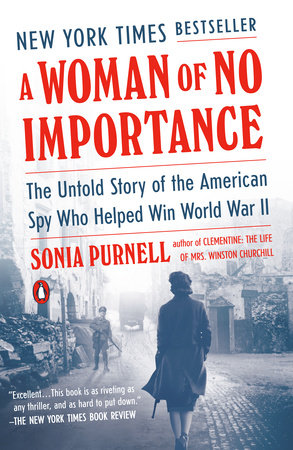
Cover of A Woman of No Importance by Sonia Purnell

Continue reading

A Woman of No Importance

Sonia Purnell’s biography restores Virginia Hall’s extraordinary story of espionage, resistance, leadership, and personal determination.

View the book

Explore Virginia Hall’s history through the CIA Museum and the National Park Service history of the OSS.

← Return to the Library