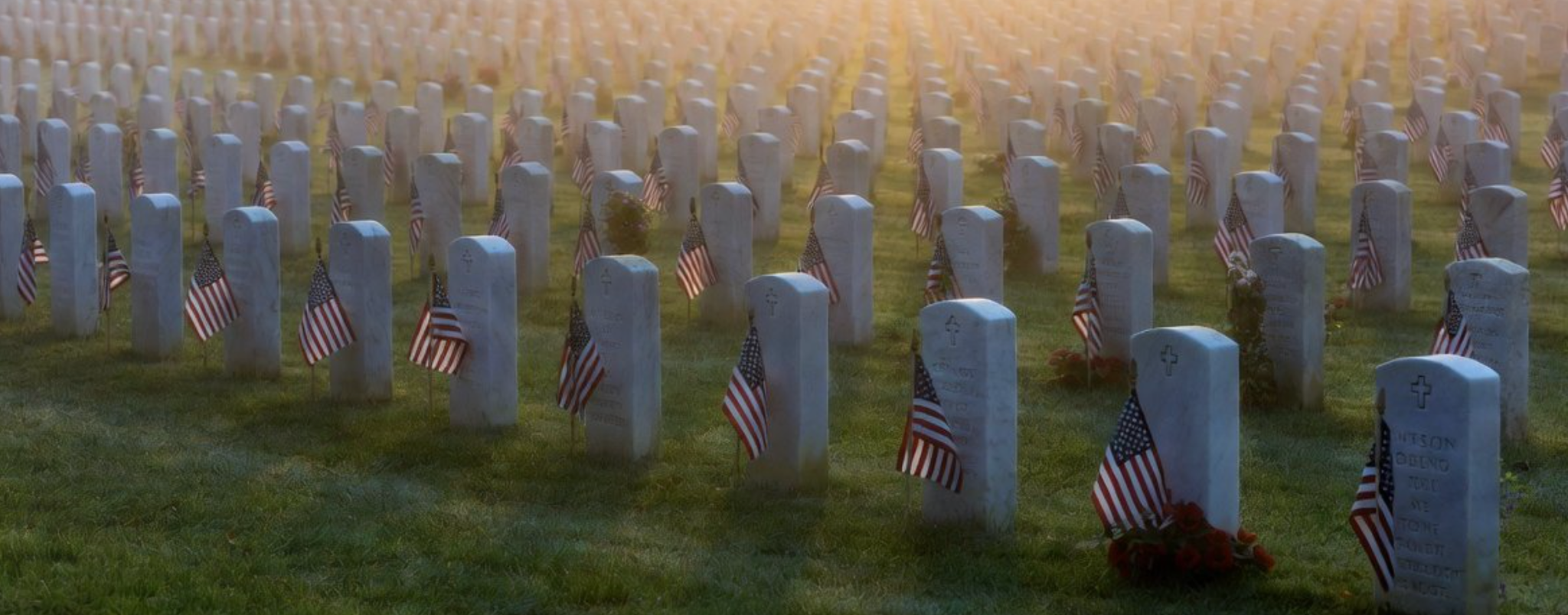
The men and women we remember today still shape how we fight,
prepare, and protect others.
Memorial Day is often marked by ceremonies, folded flags, moments of
silence, and names etched into stone. Those traditions matter because
they force us to pause and remember the Americans who never made it
home. But remembrance alone is not enough.
The men and women we honor today left behind more than memory. They
left behind lessons. Lessons learned through sacrifice, courage,
failure, adaptation, and survival. Many of the protections we rely on
today, whether on the battlefield or here at home, were built only after
Americans paid an extraordinary price.
Throughout history, our adversaries have continuously evolved. They
study our habits, exploit complacency, adapt to our defenses, and search
for vulnerabilities. Time and again, America has been forced to learn
difficult lessons after moments of strategic surprise, intelligence
failures, or rapidly changing threats. The cost of those lessons has
often been measured in lives lost.
Honoring the fallen means more than remembering their sacrifice. It
means ensuring the lessons they left behind continue to protect future
generations.
Intelligence
and Warning Lessons Were Written in Sacrifice
Long before modern intelligence agencies, satellites, or cyber
operations existed, America understood that survival depended on
recognizing threats before they fully emerged.
During the American Revolutionary War, the Culper Ring operated as a
covert intelligence network inside British-controlled territory. The
network gathered information on troop movements, British operations, and
planned attacks while using coded messages, invisible ink, dead drops,
and covert communications methods that still resemble intelligence
tradecraft used centuries later.
The lesson was not simply that intelligence matters. The lesson was
that warning signs are only valuable if leaders are willing to recognize
threats early enough to act. That lesson repeated itself throughout
American history.
The attack on Pearl Harbor demonstrated the devastating consequences
of strategic surprise. More than 2,400 Americans were killed in an
attack that fundamentally reshaped military readiness, intelligence
coordination, and homeland defense. While warning indicators existed,
assumptions about Japanese intent and capability contributed to a
failure to fully recognize the immediacy of the threat.
The result was catastrophic. In the aftermath, the United States
transformed its intelligence posture, military readiness, and strategic
planning because the nation understood it could not afford to be caught
unprepared again.
Decades later, the September 11th attacks revealed another form of
strategic surprise. The threat did not arrive through fleets or
conventional armies. It emerged through decentralized terrorist networks
capable of weaponizing civilian infrastructure against the homeland
itself. Warnings existed. Known terrorists existed. Fragments of
intelligence existed across multiple agencies. But the threat picture
was not connected quickly enough to prevent nearly 3,000 Americans from
being murdered on U.S. soil.
The lessons from 9/11 reshaped aviation security, intelligence
sharing, watchlisting systems, emergency response coordination, and the
broader understanding that threats to the homeland no longer required
traditional battlefields. Strategic surprise lessons were written in
sacrifice.
Underestimating
the Enemy Was Written in Sacrifice
One of the most dangerous mistakes any nation can make is believing
an adversary will think, act, or escalate according to our
expectations.
The Korean War offered a painful reminder of that reality. As U.S.
and allied forces pushed north in 1950, many believed the war was
approaching its end. Instead, Chinese forces entered the conflict in
massive numbers, transforming the battlefield almost overnight and
forcing a rapid reassessment of intelligence assumptions, escalation
risks, and operational planning.
The lesson extended far beyond the Korean Peninsula. It reinforced
the danger of underestimating adversary resolve, political motivations,
and willingness to absorb losses in pursuit of strategic goals.
Years later, the Tet Offensive demonstrated another difficult truth:
an enemy does not need to win tactically to achieve strategic impact.
Despite suffering enormous battlefield losses, North Vietnamese and Viet
Cong forces used coordinated attacks to shock the American public and
alter perceptions of the war itself. The offensive exposed the gap that
can emerge between battlefield metrics and strategic reality. It also
demonstrated how adversaries exploit surprise, media attention, and
psychological impact as force multipliers.
Those lessons continue to matter today. Modern terrorist
organizations, hostile states, and decentralized extremist networks
understand the strategic value of fear, disruption, propaganda, and
psychological pressure. Whether through terrorism, cyber operations,
misinformation, drone attacks, or online radicalization, adversaries
increasingly seek to create instability disproportionate to the actual
resources they possess.
The homeland remains part of that battlefield.
Tactical Evolution
Was Written in Sacrifice
America’s adversaries have consistently adapted to our strengths
while searching for our vulnerabilities.
The 1983 Beirut barracks bombings demonstrated the devastating
effectiveness of suicide terrorism against hardened military targets.
The attack killed 241 American service members and exposed
vulnerabilities in force protection, perimeter security, and the
understanding of asymmetric threats willing to weaponize martyrdom
operations.
The attack fundamentally changed how U.S. military facilities were
protected around the world. Standoff distances increased. Barriers
improved. Threat awareness evolved. Force protection became a central
operational priority because leaders recognized that conventional
security assumptions no longer matched the evolving threat
environment.
The warning signs continued.
The USS Cole bombing revealed how terrorist organizations like
Al-Qaeda were refining suicide attack tactics against U.S. military
assets years before 9/11. The attack demonstrated patience, planning,
reconnaissance, and the willingness of adversaries to exploit moments of
vulnerability using relatively simple methods against far more advanced
targets.
Following the invasions of Iraq and Afghanistan, insurgent networks
evolved again through improvised explosive devices, decentralized attack
cells, insider threats, encrypted communications, and online propaganda
operations.
Roadside bombs became one of the deadliest threats facing American
forces because adversaries adapted faster than many expected. Insurgent
groups continuously modified triggering mechanisms, concealment methods,
and attack tactics in an effort to stay ahead of coalition defenses.
Those sacrifices drove major advances in counter-IED operations,
intelligence fusion, surveillance capabilities, route clearance tactics,
battlefield medicine, and force protection measures that continue to
influence both military and homeland security operations today. The
enemy evolved constantly. Survival depended on adapting faster than the
next attack cycle.
Preparedness
Lessons Were Written in Sacrifice
Many of the lessons learned through war eventually shape how America
protects its citizens at home.
Advances in battlefield trauma care transformed civilian emergency
medicine. Tourniquets, hemorrhage control techniques, rapid trauma
response, and tactical casualty care now save lives during mass casualty
incidents across the United States because those methods were refined
through years of combat experience.
The response to the Boston Marathon bombing demonstrated how
preparedness, rapid medical intervention, public awareness, and
coordinated emergency response could reduce loss of life even during a
complex terrorist attack.
Law enforcement agencies adapted active shooter response tactics
after incidents like the Pulse nightclub shooting because waiting
outside during an active attack costs lives. Schools, hospitals,
transportation systems, and public venues increasingly developed
emergency action plans because threats to the homeland now emerge from
both foreign and domestic actors operating with little warning.
Preparedness is no longer solely a military responsibility. It
belongs to communities, first responders, intelligence professionals,
educators, families, and ordinary citizens. That lesson matters now more
than ever.
Today’s threat environment continues to evolve rapidly through
decentralized radicalization, accelerationist violence, online
propaganda ecosystems, cyber operations, drone warfare, and lone actors
capable of mobilizing without direct command structures. The next
strategic surprise may not resemble Pearl Harbor or 9/11. It may emerge
through methods that seem small or fragmented until the consequences
unfold in real time.
History repeatedly shows that threats ignored early rarely become
less dangerous with time.
Why We Remember the
Sacrifice
We cannot bring back those we lost. But we can ensure their sacrifice
continues to matter. We honor the fallen not only through remembrance,
but through vigilance, preparedness, adaptation, and the willingness to
learn from the lessons they left behind. Every generation of Americans
has faced evolving threats, and every generation has paid a price to
better prepare the next.
Many of the protections safeguarding the homeland today exist because
others identified vulnerabilities only after tragedy struck. Many of the
tactics that save lives today were developed because Americans on
battlefields, in barracks, aboard ships, and on U.S. soil paid the price
for lessons we could not afford to ignore.
Memorial Day should remind us not only who we lost, but what their
sacrifice was trying to teach us. The men and women we remember today
still shape how we fight, prepare, and protect others. Their sacrifice
continues to strengthen the nation they gave their lives to defend.
·
Originally published by Sarah Adams. View the original post →